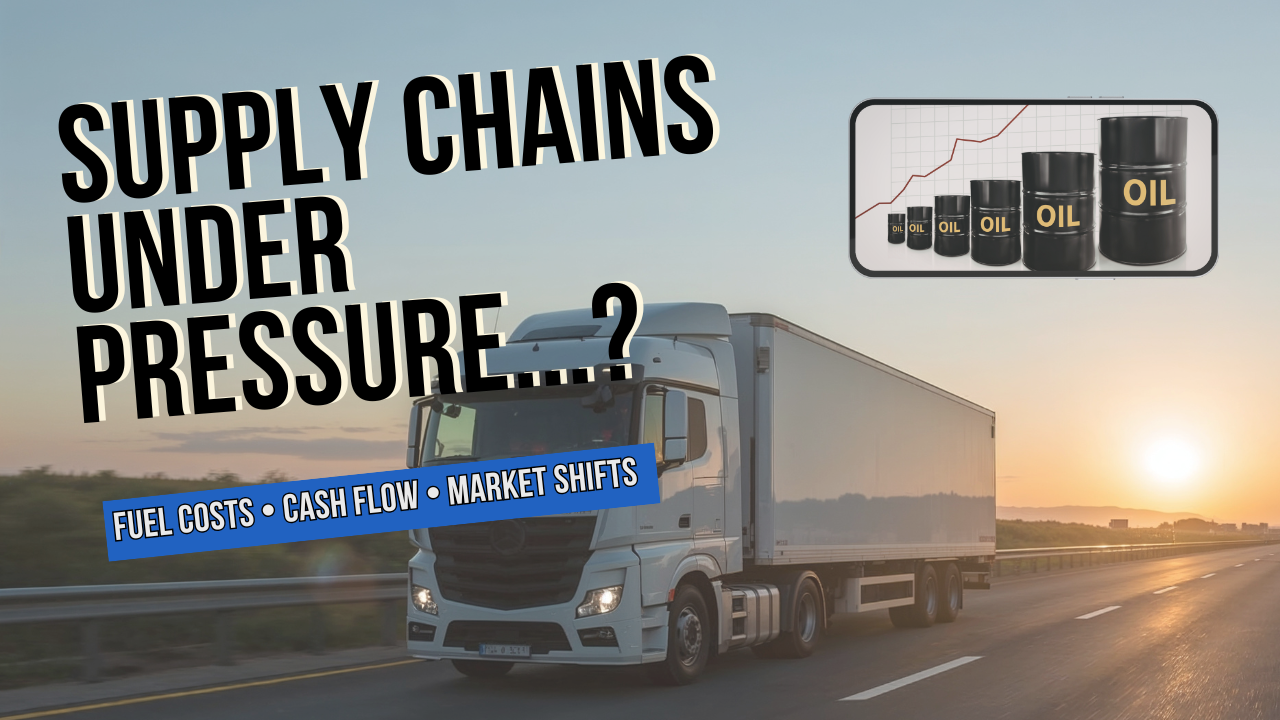
Fuel costs, cash flow and the changing landscape of European transport.
The situation in the Middle East, rising global tensions, and the sharp increase in oil prices are creating a new reality.
But how deeply do these developments actually affect supply chains?
And more importantly what do they mean for the European market and road transport?
In practice, the pressure is already here.
Carriers are being asked to run routes with fuel costs that change week by week with no guarantee they will recover these increases.
Payment agreements often come with delays of 30, 60, or even 90 days, while fuel must be paid immediately.
At the same time, fuel adjustments are either slow to be approved or fail to fully reflect the actual increase in costs.
How long can this kind of cash flow pressure be sustained?
And this leads to another important question:
How resilient is the small or medium-sized carrier or freight forwarder?
Do they have the liquidity to absorb these fluctuations?
Or are they simply absorbing losses until they can no longer continue?
At the same time, the larger players in the market appear to have a clear advantage.
They often have the capacity to temporarily absorb cost increases, offer longer credit terms,
and even attract new clients during periods of instability.
👉 Is this simply competition?
👉 Or is it a quiet redistribution of the market?
After COVID, a period during which large companies significantly strengthened their position — could the current developments accelerate market concentration even further?
And perhaps the most difficult question:
Are mergers a strategic choice…
or are they gradually becoming a matter of survival?
Who will be able to withstand this pressure and for how long?
Perhaps the only certainty after yet another crisis following COVID, the surge in demand, and the energy crisis, is that consistency, clear rules, and well-structured processes remain the only real defense for a company.
We would like to hear your thoughts!